Showing posts with label gw. Show all posts

Saturday, August 6, 2016

One More Saturday Turns 2 Today!

~2 happy 2 b celebrating year 2~
Remember that scene in Gilmore Girls where Lorelai wakes up Rory on her birthday and snuggles into bed with her? (Here's the clip if you want it; have tissues nearby.) Lorelai whispers about how on this very day, many moons ago, her lil nug was born and her life since then hasn't been the same. Picture me, getting out of bed for the sole purpose of getting back in again to recreate this scene, snuggling with my lil Macbook and quietly whispering, "Two years ago, on this very day and in this very room, you were born."

Gilmore Girls references aside, OMS was the brainchild of a series of interactions with wonderful humans. It started with my high school economics teacher, who was supportive and encouraging about my writing and suggested starting a blog back when I was a wee freshman in college (and an econ major, nonetheless). I talked to my wonderful and supportive friend Danielle, the only blogger I knew at the time. And I bounced ideas back and forth with Alana, with whom I first started this bad boy. Two years later, this blog is all mine. 

And this sounds cliché, so sorrysorrysorry, but this blog would be nothing without all of y'all. One More Saturday has allowed me to write about the things I want to write about, and it has been an outlet for pieces that I can't really put anywhere else. It's helped me to write better, present my content better, photograph better. More than anything, I'm grateful for how this blog has helped me to connect and reconnect with all the wonderful humans around me. Over the past two years, I've received so many personal messages from friends, family, and strangers. Just as much as I value the friends who understand and value and appreciate my words enough to read and share them, I appreciate the strangers and near-strangers who do the same. I've had people I only met in passing message me years later to simply tell me how much my posts meant to them. That's nuts to me, and that's one of my favorite things about being a writer.

I love it when I read something – a novel, a poem, a blog post – and immediately feel like I connect with the writer. I want to be their friend, I want to buy them coffee, I want to thank them for just doing what they do. The fact that I can be that writer for anyone in the world, never mind multiple lil humans out there, is just so crazy cool to me. 

So thank you guys. Really. Thank you to all of you who have read any number of posts in the past few years. Thank you to my generous, loving, caring friends and family who read and comment and share over and over. I've said this before, but you really don't know how much your support means to me. Thank you to all the strangers, the friends' moms (I know you're out there!), the former classmates who care enough to click on the posts I share on Facebook, and everyone else. You guys have made this experience so rewarding for me. It's so gratifying to learn that someone appreciates your labor of love as much as you do; just know that I appreciate you guys, too.

P.S. Here's the song that inspired our blog name. I'll be out turning this blog birthday into a lifestyle. Hope you enjoy your Saturday, too <3


~ V

Monday, July 11, 2016

Sinking and Swimming and Other Things I Learned Post-India


In the weeks since I've been home, I've had dozens of conversations that all start the same way: "How was India?" 


My friends from abroad and I have bemoaned this amongst ourselves, sometimes getting a bit salty about how lazy the question can feel. One said, "How's India? How are we supposed to fit so many months of experiences after such a simple question?" And this is fair. But one thing I've been thinking about is that people tell you how much they care. Both in the general sense and in the context of the post-India, manic-depressive readjustment phase, it means that sometimes people are asking just to be polite and other times they really want to know.

In regards to the former, it's pretty simple responding to, "How was India?" You manage to shorten five months of experiences into a short, 30-second spiel, one that gets more direct — and reductive — each time it is told. Just like that, five months of traveling and taking classes and learning (because while the two aren't mutually-exclusive, they're certainly not necessarily linked either) and laughing and dancing and yoga and riding bikes (both with a motor and without) are diluted. And sometimes this is a warm welcome; it's nice to momentarily pretend that this experience wasn't as wonderfully exhausting as it was. It's nice to imagine my life as some cheesy Bollywood film with just a few themes and characters and outfit changes and musical numbers and even a dramatic montage thrown in for good measure.

Then there are those who when they ask about India, really want to know. After more than six months away, I went to D.C. last weekend and met up with some friends. When my friend Medha asked, "How was India?" she followed up with some more direct questions. "What was it like adjusting there? How were the other students? What was your daily routine like?" And my response, while a bit more rambled and messy and verbose, was more honest.

But as I recounted details and experiences of my time abroad, I realized that it all felt so far away. My friend Shanice recently wrote to me, "India feels like a far-off dream most days." And while India is undeniably far with respect to geography, I hardly think a few weeks is enough to explain how distanced I feel otherwise, how disoriented I sometimes feel in this post-India life. 

When Shanice and I spoke about how we both miss India but are happy with what we've got going here in the U.S., I said I was "good at the moment," something that rings true because missing India comes in waves. There are moments of tranquility where everything fits and you're just flowing along in your new routine. And then something will happen to trigger what it feels to miss India. Something will remind you how much you don't fit in here, not that you fit in there either, because you don't fit in anywhere. And that wave will pass, and you'll try to make sense of whatever you can on the sodden sand, but it's just a matter of time before the next wave comes along.

The good thing though is that the waves are getting smaller.

So, how was India? I don't know. It's hard to say. Ask me when the tide shifts again.


~ V

Wednesday, January 6, 2016

What I learned in India: Weeks 1 & 2

{parrots outside my aunt's window, Mumbai}
I've been in India for two weeks but have been busy nearly constantly. In between spending time with family, sightseeing, and participating in orientation activities for my abroad program, it seems like I hardly have enough time to sit by myself and just decompress, never mind write. But writing has always helped me to process what I experience and so here we are, at the beginning of a new year and a new experience abroad.

Rather than always doing a numbered list for things I've learned in India like I did in Spain, I think it's best for me to write in paragraph form. In Spain, it was easy to understand what I had learned by finding what was new, what taught me through novelty. My experience in India differs—at least thus far—in that I've already been here, in that the culture is my own. Noticing patterns in the vernacular, picking up on behaviors and customs, and acclimating yourself to a new way of life is a bit different when these adjustments are familiar, when you've grown up knowing and then compartmentalizing them into a particular sector of your life. 

But even when things are familiar, they allow you to learn from them, to gain and to grow. And even though I've been to India multiple times, even though I was born here, even though the culture lends itself to my own hyphenated identity, I find myself learning new things and experiencing the growing pains that come with doing so. 
{Shilpramam}
Adjusting to India was hard for the first few days. But seeing family and focusing on my abroad program kept me focused and soon enough, I acclimated myself to life here. My university is definitely different from GW, and although I haven't started classes yet, I'm really excited about my tentative course load and some extracurriculars I've already found. I love having Indian food every day and I love riding my bike around my ginormous campus—3,000 acres and two lakes! Beyond this, I've met some amazing people. The staff running our program is just incredible and is going above and beyond to make this experience the best it can be for us. We're well-fed and taken care of and we've had some really interesting lectures and guest speakers.
{Chowmahalla Palace}
I definitely wasn't as excited when I first got here though. For one, being in India and around family brings out another side of me. For a few days, I found that I behave a certain way when I am here, or at least I am expected to. And when I was around the other CIEE students, all of whom are American, I reverted back to who I was in DC, the "American" version of myself. It's weird, flip-flopping especially in this setting. Indian-American kids learn quickly and early on to compartmentalize aspects of their lives and personalities. Doing so in India is so unfamiliar to me because for once, the Indian aspect of my identity is the dominant culture. For once, I take pride in speaking Hindi and knowing who Shah Rukh Khan is and not being fazed when I see cows on the street. 

Growing up, I was definitely made fun of for being Indian. I wasn't bullied or anything, at least not in the traditional sense, but I learned quickly to not discuss Indian music or bring Indian food for lunch or speak in Gujarati with my friends. I didn't want to be the weird Indian kid, I wanted to be "normal," to fit in. It's weird having those same things I suppressed now carry cultural capital, to now be things worth mentioning or at least having pride in.
{sunset from Hussain Sagar}
I told a new friend about how ironic it was to travel 8,000 miles and still end up the only brown girl in a big group of kids. I felt like I was the only one with a dual identity, the only one navigating through which parts of myself to hide and which to share, the only one deciding how Indian to be or how American. 

But now after a short-lived transition period, I'm so incredibly happy to be here. For a few days, I found myself reconsidering it all. Who the hell goes to India when they can go to Amsterdam? I asked myself. I looked at the streets and the university buildings and the heat and the inability to travel or even wander by myself and freaked out. Why did I come here? Was coming here truly necessary to learn what I wanted to learn? Could I have just come here for winter break in between semesters or before studying in Amsterdam or Cape Town? And then I sat down in my classroom of the first day of orientation and calmed down. I was going to be fine, I told myself. Everything was organized and planned and orderly and I could handle whatever was new or uncomfortable or uneasy. 

{vendors, Mumbai}
So an hour into that first day, I got really, really excited. I bounced in my seat a little and grinned and told myself to calm the hell down—I was in public for god's sakes. Had I had too much coffee that morning? For once, no—I'd had none. I was just excited for my amazing classes and to meet all the cool students and spend more time with my family and really, really experience living in and acclimating to India. 

And now, two weeks in, I feel like I've adjusted. While I'm still a bit overwhelmed at times, I don't find myself scrambling to adjust. I feel like I've regained a balance, that I've found some great friends, and that I have some cool classes and extracurriculars to look forward to. I'm already thinking about how leaving will feel like, but I'm excited to be here for whatever time I have. Until then, here are some photos from the past two weeks:
{the sweetest welcoming from my Mami}

{the hospital in which I was born}
{excuse the nails but look at these chikoos!}


{friendly stray cat, Mumbai}

{home circa 1995-97; ours was the window on the top left}


Believe it or not, these are only 38 out of 675 pictures I've taken so far. I can't wait to bring my camera with me as I explore the city. Stay tuned from more from Hyd!

~ V

Saturday, January 2, 2016

The problem with writing about India

Being in India is amazing. Or rather it's not; amazing is a silly word to use. It's diluting and reductive and doesn't begin to describe what being here is like, what I've seen and heard and eaten and felt. But the words to describe India are hard to find and putting them together to recount all the stories of the people I've met and the sights I've seen is even more difficult.

The thing is, writing of India is more than a little complicated. For one, I don’t want to misrepresent my own culture—or half of it, anyway. I don’t want to feed into the U.S. orientalism of Indians or Asians in general. And as my new friend Sara says, it's important that we don't share the stories that are already told, those that depict a very particular view of India, those that propagate stereotypes of in-your-face vibrancy or painful-to-see poverty. After all, India isn't Bollywood. India isn't Slumdog Millionaire.

In writing on a public platform for an audience I don't wholly know, I'm afraid to describe what is different in India, to speak of dirty streets and misogyny and spicy foods. I know that to some degree, friends and family and other readers who have been here know what I am describing and are aware that this is not all that India is, that this is not true for all of India. But for the readers who do not know, whose only impressions of India are those in movies and other media that show only one facet of Indian life, my descriptions do nothing to tell them what India is really like. In describing the way I feel walking down the street or going about what is slowly become a routine here, I am afraid to feed into an idea of India that, while not wholly untrue, is in not truly accurate.

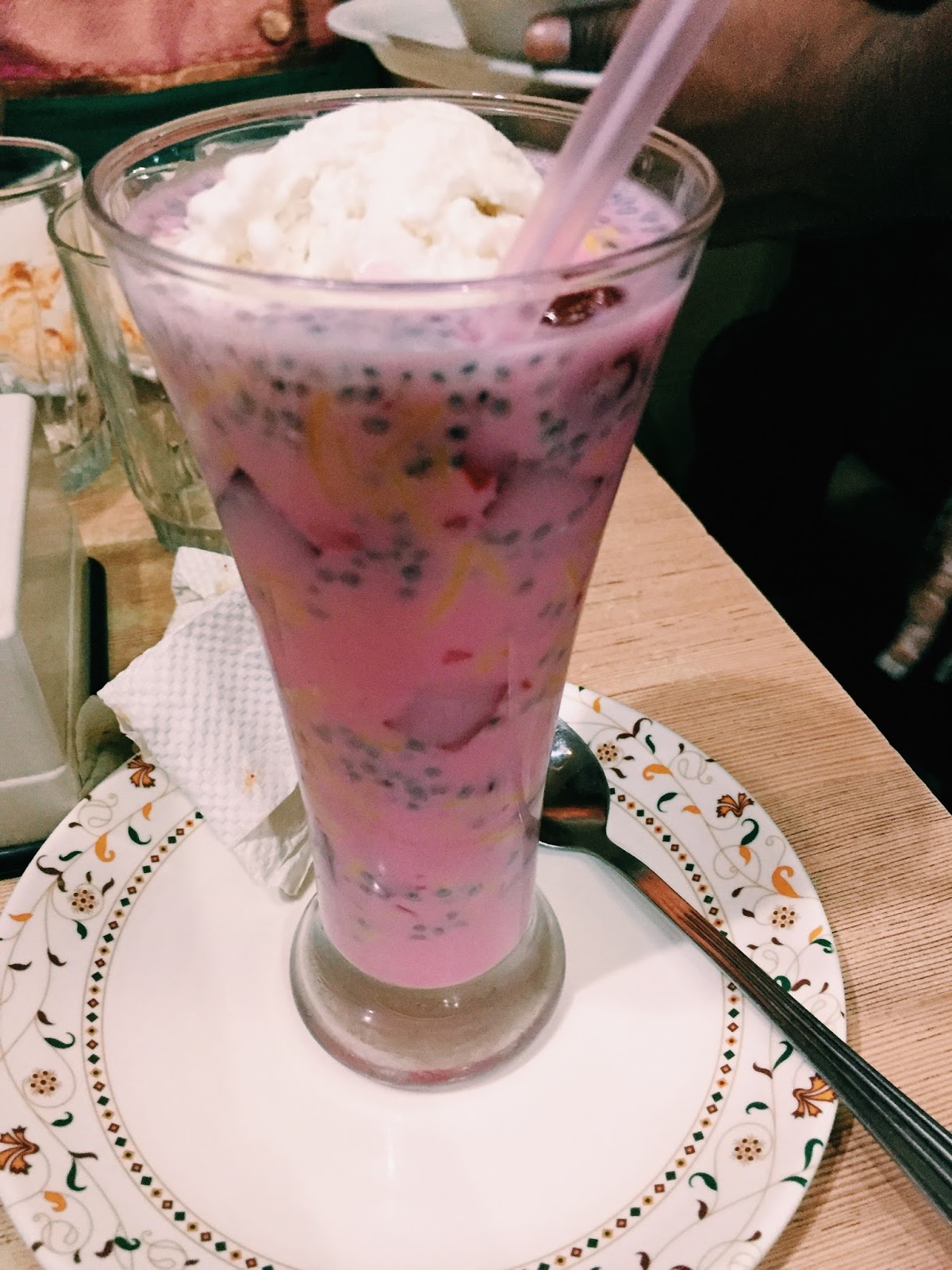
What comes to mind when you think of India? As someone who was born here, I think of my grandparents and their homes. I think of the many family members who I rarely see. I think of faloodas and hot weather and shopping. But more than these images, I think of a feeling. I remember how being around my family makes me feel comforted. I think about a sense of home that comes with the dissonance of not fully belonging. And I feel so much more, things I'm still trying to cognize and understand and rationalize and process.


Another issue with writing of India is that I sometimes get overwhelmed by the millions of stories of Indians and Indian-Americans that aren’t told. For one, while my Indian-American peers and I have experienced more subtle racisms than overt acts of violence or brutality, there are thousands of individuals who have dealt with much more. A few days ago, about half of us from our CIEE group visited an NGO called Shaheen. We met with about thirty women who had dealt with experiences such as rape, child marriage, domestic violence, and adversity finding educational opportunities. 

When I tell you this, when I share diluted snippets of their experiences, I want you to keep in mind: this is not what India is. This is not all that India is. This does not only happen in India. This is not a reflection of India, but it is a human rights issue that is to be understood across many dimensions.

It gets to the point where I hesitate sharing these stories. Even in the selection of photos, I try to stay away from just photos of cows, stray dogs, palaces, and forts. These are the images of India that are already shared and overshared. It's not that doing so is wrong in and of itself. Rather, it's that I want to post consciously and I urge you all to consume consciously as well. As Sara and I were discussing, there is no final answer, no clear right or wrong. There’s no resolution or big solution to all of this. But that doesn't mean you stop trying, stop questioning.


At the same time, rather than avoiding speaking of India altogether, I feel compelled to share these stories because so few people talk about these issues. The absence—or rather inaccuracy of representation and lack of a thorough presentation—of Indians and Indian-Americans in American media is astounding and frustrating to me. In The Karma of Brown Folk, Vijay Prashad writes, "In the United States the bulk of the desi community seems to have moved away from active political struggles toward an accommodation with this racist policy." I too have found in the Indian-American community a tendency to accommodate ignorances rather than to resist struggle, to question, or to act. With this in mind, I can't help but feel a sense of duty; if I don't talk about this, who will? If I don't stand up for myself—for ourselves—who will?

It disenheartens me when people don't stand up for themselves or when they are unfazed by subtle racisms. On one hand, it's a sign of accommodating themselves within the system, acquiescing to centuries of racist and imperialist ideology and orientalism. On the other, it adds more pressure upon me. Why aren't all of my peers politically involved, equally frustrated with the inequities and injustices? It makes me question myself and my convictions. Am I taking this more seriously than is needed? Am I making a bigger deal than is necessary? 

But then I think about how this is how this sort of ideology and discourse functions, that with injustice comes a tendency to internalize misogyny, racism, etc. and to transform self-worth and one's experience of oneself. Across the board, whether you consider experiences of disability, race, gender, sexuality, and other groups that are or have been systemically disenfranchised, there are those who have had to be responsible for their people, who have had to be the pioneers of their communities. Of course, I in no way mean to suggest this is what I am; rather I remind myself to be grateful for those who are and to perhaps borrow a bit of their courage, passion, intellect, and bravery. It might be that this frustration and this unrelenting passion is a reflection of my youth. But it's 2016 and I'm tired of accommodating ignorances and apologizing for who I am and what I stand for.

You might be asking, what is India? If it's not just bad traffic and street dogs and spicy foods, what is it? Well the thing is, that can't be said. Of course, it isn't possible for me to sum up the entirety of what a country is in one blog post. But for me, India is family. It's a weird sense of home closely tied to the contradictory sense of not fully belonging. It's an educational experience of understanding another way of living my life and being or becoming myself. It's early mornings and late nights and a sense of calm amongst chaos. So yeah, there is bad traffic and street dogs and spicy foods, but India is just so much more.

~ V

Tuesday, December 22, 2015

See you soon, India!

Today's the day! In a few hours, I'll be on a fifteen-hour flight straight to Mumbai. How do I feel about this? Well, excited for one; this is incredibly important to me for so many reasons. But I'm also nervous, unsure of what to expect, and worried about missing my friends and everything at GW. More than anything though, I feel really, really ready for this. Over the past few days I've been home I've been thinking about this trip and all it means to me and I'm more sure than ever that I've made the right decision in choosing to study abroad in Hyderabad.

A few weeks ago, my friend Mansi and I were in my dorm room, making cookies late and night and pretending we didn't have our internships the next day. We had both been talking about how much Madrid meant to us, reminiscing over old photos and metro maps and memories of dry heat and cold sangria. I told her how sad it made me to miss Madrid. The very act of missing something suggested it was part of your past, and even when I looked through the photos I had printed out from my trip I felt weirdly detached, removed. It wasn't that Madrid meant any less to me than it did while I was there; on the contrary, it means more and more as time goes by. But it felt like it had all happened so long ago. I've been back for four months and I miss it every day, but when I look at pictures of bus rides and cathedrals and my host kids, I'm looking at my memories, at my past rather than my present. 

There is so much pain in missing something. Isn't that where grief comes from? From missing a loved one and what they meant to you and how they made you feel. From missing a relationship and knowing that your significant other will never be what they once were for you, that you've moved from a place of loving them to learning how to hate them, to learning how to feel nothing when you hear their name. In the same way, I've been grieving Spain. I hate that I don't live there anymore, that my metro is the DC Metro and not the Madrid Metro, that I don't eat patatas bravas and take weekend trips and live with four amazing people and spend way too much money at ZARA. And sure, some of these things can be recreated here, but it's just not the same. It's not my life anymore, it's not my present anymore—it's my past.

As Mansi and I stood in my kitchen talking about Madrid, I told her how missing Madrid worried me because it reminded me about missing India. I moved away from India when I was only two, but because I have family there, I visit quite often and to some degree, I think of India as home. Not a constant home in the way that New Jersey is, but a home nonetheless. Because of that, I've grown up with the ever-present feeling of missing it. I remember having a conversation with a classmate in a middle school art class about how much India meant to both of us, and how missing it manifested in the form of flashbacks. We both visited every other summer, and after the one-year mark, we'd both start having flashbacks of seemingly random images and memories—the rickshaw ride to a relative's house, the storefront of a sari shop on a crowded street, the way the highway looked on the way back from the airport, the view from your grandmother's window, the smells of the dirty streets. These aren't necessarily emotionally-latent memories, but they mean so much because they remind you of how much you miss home, miss place and the people in it. 

One of my favorite movies is Swades, a story of an NRI (Non-Resident Indian) who goes back to his village. He reconnects with place, and while the relationships he has with a mother-like figure, a love interest, and various other people in the village are all meaningful, for me the movie has always been about what returning to India feels like. At one particular point, the main character decides to quit his job at NASA and move back to India permanently. He tells a fellow-NRI friend about it, but the friend tries to dissuade him from doing so.

At this point, in classic Bollywood fashion, a song begins to play. But the movie is so well-made that this starts with a flashback just like the ones I often have. Image after image passes by and the lyrics (this website includes the English translation, too) at this point are just so poignant, so heavy and exact and they pinpoint just how the pain of missing people and place manifests. 

You see, missing India has always been a part of me. I've always missed my grandparents and the home I grew up in and the streets and the food and the sense of family and belonging. And although I lose that sense of belonging the older I get, the more "American" I feel, I can't help but think it's time to get that back. 

Because I was born there, because I could have so easily lived there and grown up there, I often wonder what my life would've been like. It's crazy to think of the hundreds of people I would never have known, as well as the countless people I could have. So in a way, I guess I'm returning to India to explore the life I almost led, to learn and grow and live the way I did in Spain, to reconnect with family and place and myself.

At the same time, I'm looking to dance again, to become better at Hindi, to reconnect with family, to learn more about the history and culture that are part of my own hyphenated identity. I've been reading the Karma of Brown Folk—which is absolutely blowing my mind, by the way—and I'm looking to consider orientalism, colonialism, imperialism, and the Indian-American experience from the other side of the world. I included this quote on my post before my trip to Spain and I'm including it again because of how relevant and true it is: "Travel not to find yourself, but to remember who you've been all along." I'll only be there for five and a half months, but during this trip, I hope to better understand who I am and what I am and what I've become and who I want to be.

Have you got any advice or words of wisdom to share? Please let me know in the comments below! Wish me luck and I'll see you in June, America!

~ V

Wednesday, October 14, 2015

Goodbye D.C., hello Hyderabad!

{me and my mom in Bombay circa 1999}
It's official—I'M GOING TO INDIA!!!! This spring semester, you can plan on visiting me, my falooda, and my improved Hindi at the University of Hyderabad. I am so excited for this journey and all it means to me and can't wait to blog about it the whole way through.


As some of you may know, I was born in Bombay and moved to Lagos, Nigeria and Houston, Texas before growing up in my small town in New Jersey. And even though I used to visit India every other summer, it has now been six and a half years since my last trip to my other home. Even still, I can vividly remember how each trip changed me, made me rethink views I had, made me compare the two sides of my identity and grow beyond being simply Indian or American. 

India always makes me think, grow, and feel in ways I have forgotten, and sometimes even in ways I never imagined I could be. It might be in part that I had changed so much in between trips that going to India served as a marker, a reminder of who I was. I got to see my growth and change through the eyes of family that only saw me every two years. But I think visits to India went even beyond that. 

When you're an Indian-American kid, you're always working on a balancing act, and when you're younger, you let Western culture dictate a lot of your feelings about yourself, your relationship with your racial identity and culture, the decisions you make, the borders you draw between the two parts of yourself. But coming to GW has changed a lot of that for me. Partly because I got out of my small, nearly homogenous town (which I still love), but also because I made friends who were figuring things out for themselves, too.


Going to India as a kid forces you to acknowledge that, though. You're forced to look at the decisions you've made to be this much Indian or this much American. I'm always teased by family in India about how "American" I am, or how much of my "culture" I've lost or retained. But at the same time, here, today, in America, a similar thing happens. My friends and I joke around with each other all the time about how "Indian" we are for loving Bollywood or certain foods or whatever. The term "fob," for those who don't know it stands for Fresh Off the Boat, and it becomes a sort of way to police immigrants and second-generation kids about how they've defined their culture, what parts they've chosen to keep or let go off or whatever. So either way, you're policed—whether it be by yourself or by others—about the decisions you've made.


For me, I've come to value the parts that make me who I am more than I'm capable of describing. I love that I know four languages, that I have multiple cultural and linguistic lenses through which I can look at things and make sense of the world around me. Take something as trivial as skin color for example. Traditional Indian culture favors fairer skin, while here in America it's not uncommon for people to hop into tanning beds or lay out on the beach for hours. I'm not trying to say that one is right while another is wrong; I don't know that a right and wrong necessarily exist. It's just that understanding both sides has allowed me to love the skin I'm in, quite literally. I don't mind that I turn "pale" in the winter or that I tan ridiculously quickly in the summer. Having the two lenses enables me to decide for myself who I am, what I want.


But cultural duality goes beyond that in a way that I'm still learning about and still trying to understand. In that sense, I look forward to letting Hyderabad push me; I welcome the moments that will teach me through tough love as much as I await those that will remind me what raw, unforced, unadulterated happiness feels like. And lucky for me, the University of Hyderabad offers courses in my fields—English, Creative Writing, and Film—but I know that the majority of the learning I'm going to be doing will be outside the formal academic environment. 

I've been planning my study abroad experience for months, but every time someone asks where I am going, I am almost reluctant or embarrassed to answer. A professor asked me the same question this week and I froze before answering quietly, trying to stop myself from offering some sort of bullshit explanation or justification as if it's at all necessary. But I can't ignore the fact that I feel like people look at me and assume that I chose India because I am Indian. Needless to say, being Indian-American certainly has to do with my love for and connection with India. I can't say what my relationship with India would've been if I wasn't Indian; I don't know who I would be if I wasn't Indian. But regardless of that fact, the assumption that I chose India is diluting and reductive, making my decision to be there less than what it is. Even my Indian-American friends are sometimes confused, asking why I would go to India when there are so many other places to choose from. And the thing is, I can't blame them. Because for the longest time, that was me. I was uncomfortable with parts of my identity, back before my culture became "cool" and bindis were an in thing to sport at music festivals, rather than another reminder of me being Other, another way for people to awkwardly ask me about who I was and what I was. I used to feel weird for being Indian, and sometimes I definitely still do feel like that weird little Indian girl sitting in class. But luckily, I've come quite far since that. Luckily, that's changed a lot.

And the thing is, with my relationship with India being what it is right now, I've really wanted to go back and live in India for an extended period of time, to let it shape and form and mold and change me beyond what six weeks of living in my grandparents’ flat in Bombay can do. I want to live and learn about the life I could have led and almost did lead, but even beyond that, I simply miss India, miss it with every fiber of my being to the point that it hurts and I fear being unable to recognize the country, the world, I consider my own and consider my home. I worry that it has changed too much in one direction and I too much in the other and that when we meet the connection we had will be lost, that it will no longer be mine, that I will not belong, that I will belong even less than I already did.

I feel as though I've lost a big part of me and sometimes I'm even afraid that it's too late to get it back. But you know what? I’ll be damned if I don’t try.


~ V