Showing posts with label america. Show all posts

Saturday, May 14, 2016

On Hyderabad and Home

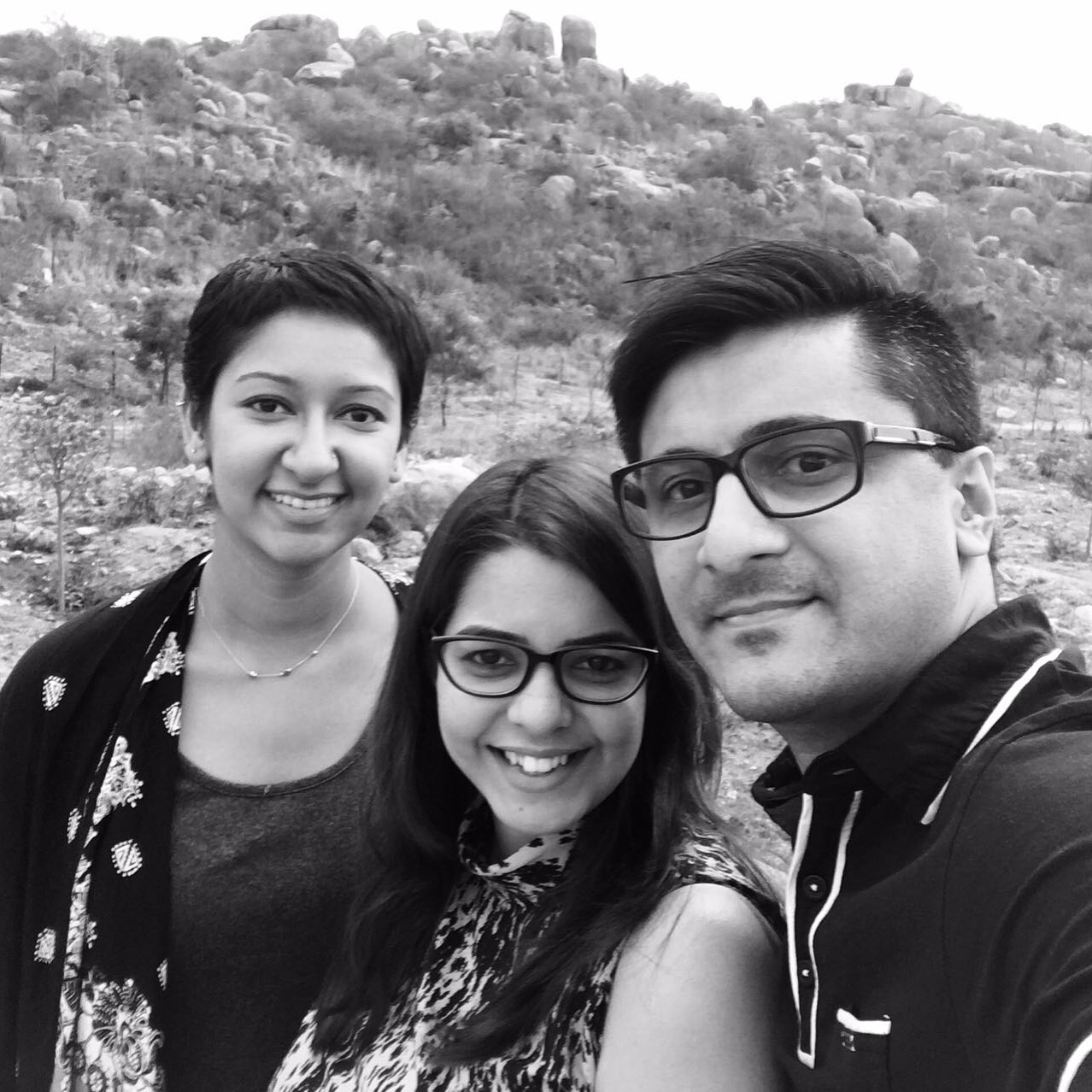
{the fambam}
My first few months of college, I felt oddly disoriented. I hadn't been at GW long enough for it to truly become home — although it certainly didn't take long for me to call it as such. At the same time, I realized quickly that my home in New Jersey was no longer mine. It was my parents' house, it was the place I'd tell people I lived during high school, it was the place I'd return for holidays and short breaks but it would never be home the way it was before college. Something had changed and I felt unprepared, blindsided. I'm often anxious when big changes happen in my life, and the more something means to me the more I overthink, over-analyze, over-internalize. But I hadn't anticipated that in gaining a new home, I'd lose home altogether. 

Now, nearly three years later, my understanding of home has become even more muddled. I have more homes than ever before, spread across different cities and different families and even different continents. 

As I write this now, I'm sitting on the plane. In between the sentences I've written so far, the plane started. The engine whirred and we pushed forward. Hyderabad, in the middle of a drought, is as brown and grey from up here as it is down below. The sun reflects off of metal rooftops and the higher we go the more gems I see in the City of Pearls. There's a lot of smog today, and somewhere in between land and sky the horizon blurs into a grey-blue. Is this home? Not anymore. 

Leaving Spain was brutal. This? Less so. I've been processing the end for weeks, have been anticipating the goodbyes and the see-you-laters and the hugs and the tears and the last times. The last time I take an auto. The last visit to campus. The last time I pet the two strays on my side of campus. The last time I buy chocolate from the south campus shopping complex. The last time I hug each of my friends. The last time I hug my family, for now. 

And by some miracle, I didn't unravel upon leaving. And even though some of my goodbyes were left unsaid — after all, you don't always know when you're in the middle of your last visit to a spot in the city, you don't always know when you're seeing someone for the last time — I was okay. Because it's not as though I'm going home, at least not to the home that is the U.S. I'm going to Bombay, to my grandparents' place, to that home. 

And even when I leave India in a few short days, I'm going to visit family in Muscat, to spend ten days in Oman and Dubai. Only then will I return to New Jersey, to a house full of people I haven't seen in months and a jet-lagged first meal of real pizza and a bed with soft pillows and a world of Starbucks and central air conditioning. Do I miss all of that? I did. At many points in these past five months, I've missed it all. But right now, sitting in this plane, I miss none of it. Not iced coffee, not driving, not even pizza. I miss my aunt and uncle already and I wish my friend was sitting next to me as she was on my last trip to Bombay. But I'm going home, and then I'm going to another home. And I guess that's the thing about having multiple homes. You can either chose to stay in a constant state of missing — missing people and place and all that comes with the two — or you can just accept your fate. Accept that part of you will always belong somewhere else, that the rest of you is here. You can just give in to being wherever you are, sink back into your seat, and enjoy your stay for however long it lasts. After all, you're only home for so long.

On a recent visit to Sri Lanka, I was talking to Nadee, the owner one of the Airbnb guesthouses my friend Jesse and I stayed at. Nadee was born in Sri Lanka and has also lived in India, but has spent most of her time in the UK. I told her about where I was from and how I'd spent some time in Spain and she nodded understandingly. "You're looking for home, too," she said. "So am I."


I didn't come to Hyderabad with the expectation of it becoming home, and I don't really think it is now. All my friends have left or are leaving soon. I just left. And when I drove through the city in auto rickshaw or car during my last week, I didn't feel the sentimentality I felt in Madrid. I'm not detached by any means, but this is always just going to be the city I lived in for a few months; the city in which I met the people that made my experience what it is; the city in which I lived with two amazing, inspiring, strong, and loving human beings; the city I studied abroad in. But my study abroad experience hasn't been about me and Hyderabad — it's been about me and India.


I've learned so much here. A year ago, I bought my tickets to Spain and it seems like since then my life has been moving forward more quickly than ever before. I've spent nine of the past twelve months outside of the United States, across seven other countries. Isn't that crazy? So much about who I am and what I want and what I've experienced has changed. I define myself by different parameters now. I'm more sure of myself and yet I'm more willing to admit that I don't know what I want, that I hardly know anything at all. And now, after nearly five months in this city, it's all over.


This semester has been crazy. I've come to question so much and I've come to appreciate so much of what my life is. I've been forced to confront how insanely privileged I am. I've learned to stop asking for more, to become patient for what's to come. I've learned to redefine what's important to me in all sorts of relationships — platonic, romantic, and familial. It's not that I've changed; I've simply grown into myself a little bit more.


And for the hundredth time, I'm reminded of how important this decision was — this decision to come to India. To study here. To grow here. To feel a little more uncomfortable before becoming wholly comfortable altogether.


But as I've said before in numerous other posts, there's nothing like travel to make you question what home is. I don't really tie my definition of home to any place or any people. At this point in my life, I simply can't. I don't live where I grew up or where I was born and I make new friends every year, every day. And this city isn't home to me. I'm grateful for that; it's a relief to not feel so intensely attached to a city for once. But this experience has certainly felt like home.


But now, unlike three years ago when I started college, I don't feel as though I have no home. Rather, I feel like I have many homes. My parents' place in New Jersey, my new apartment in DC, my grandparents' flat in Mumbai, my host family's place in Madrid, my aunt and uncle's place in Hyderabad. None of these homes belong to me; none of them are truly mine. But they've made me who I am. They're the places that mark so many different parts of who I am, who I've grown into. 


Like my definition of home, my definition of family has always been a bit confused. Growing up, my grandparents lived 8,000 miles away from me, and even though I'm very attached to the extended family I have in the New Jersey area, I've always felt a bit separate. So much of my identity separates me from my family, and it's something that I've been used to for years. And when I came here to Hyderabad to live with my aunt and uncle, I didn't come with too many expectations. I didn't think things would be as comfortable and natural and loving as they are. I didn't anticipate how much I would feel taken care of, how much I would feel like two people would love me and care for me and make me laugh and for once, I didn't anticipate how difficult goodbye would be.


It's crazy — before I even got to Spain I had anticipated saying goodbye to my host family would be difficult. And it was. But when I came here, I was just trying to wrap my head around living in India for five months. I didn't even think about how much I'd get closer to my family here, how difficult moving away from them would be for me.


I guess all I'm saying is, I've found a home here. Not in this city, but with these people. With my uncle and my aunt and our little fambam, as we've come to call it. These two understand my sense of humor, they know how I show love, they know how to make me happy and take care of me and I'd like to think I can do the same for them. I've come to appreciate the idea of family more than ever before and by some miracle my understanding and definition of home have become even more complicated.


And maybe that's my favorite thing about travel. You find home in the least expected of places. You find love in the least expected of places.


~ V

Friday, January 15, 2016

On India, religion, and belonging


It makes me laugh when people talk about India being their Eat, Pray, Love experience. Even if I momentarily push aside how problematic and offensive the suggestion is, I can't help but appreciate the irony of the implication that this is why I came to India. For one, I take great pride in knowing and appreciating truly good food. And although I appreciate paneer and garlic naan and dahi puri way more than is probably healthy, I didn't come here for the food. And unless Hrithik Roshan or Farhan Akhtar is suddenly considering dating a twenty year old, some overdramatic Bollywood fling isn't what brought me here. As for the praying—well, that's complicated.

Lately, I've been thinking a lot about how I don't really belong anywhere. When I'm around my Indian-American friends, I'm me; identity doesn't really come into play when you're around people who all identify the same way. But of course, I don't live my life in a little bubble, nor would I want to.

I remember speaking with a Creative Writing professor about a year ago about how the only time we're aware of our identities is when they're made unique, when they're made other. I rarely feel uncomfortable about my racial and national identities at GW, but I spent the majority of my life before college being ashamed of my Indian background. 

And it's weird, going from being the Indian kid in America to the American kid in India, and now, when I'm with my friends in my study abroad program, being the Indian(-American) kid among Americans in India.

But I thought I had come to terms with that. I thought it was an initial shock or a surprising sort of irony of winding up in this situation, that I had adjusted to that. But we visited a temple last weekend, and it made me really uncomfortable in a way I hadn't expected. 

I've been an atheist since seventh grade, since I was twelve. In the eight years that have passed, I've visited temples more times than I can count and have pretended to pray for the sake of placating family, for the sake of avoiding conflict and avoiding explaining myself to people who might not care to listen, who might never understand.

When I first started telling people in my family I was an atheist, over a year after some of my close friends knew, I wasn't received very well. Some told me I was going through a phase; others went so far to tell me they pitied me. And for a while I did, too. It's not easy losing religion. It's not easy reconsidering all you've ever known. It's not easy being twelve and being the only one in your entire family who isn't Hindu. But after an understandable period of time in which she adjusted and opened up, my mom came to accept my faith, or lack thereof. She stopped urging me to go to the mandir, stopped encouraging me to pray before exams or long trips. She gave me the support I didn't know I needed. She allowed me to have a bit more strength in myself, and so I got to do me.

I've been okay with what I am for years now. I'm not angry at religion, I'm not angry about being alone sometimes. I'm secure in what I am, so I was confused when my group and I attended a temple and I got weirdly choked up. I just sort of shut down, avoided my friends, tried to walk around on my own. And I got really, really sad. I started thinking about the factors that caused me to question religion and Hinduism in the first place. I started thinking about how isolated I felt as an atheist sometimes, how I'm still sometimes afraid to identify myself as so, how I use euphemisms for the sake of not offending others, as if even though I'm not offended by others' faith they should be offended by mine.

And I thought about how isolated I feel as an Indian-American sometimes. It took me years to get to the point where I can explore my identity, to where I don't hate being Indian, to where I don't recognize being American as the only way or the better way to be. But being there reminded me that I'll never really belong anywhere. The ship has long sailed on being Indian, pun fully intended. And at the same time, I'll never be American—not simply American, not only American. I am so incredibly grateful for every part of my identity for all that it has taught and continues to teach me. But sometimes it's hard and sometimes it's lonely and sometimes it hurts.

I'm so happy I came to India. I'm so happy I'm around people who are critical and questioning and open and welcoming, all at the same time. I'm with friends and family who are supportive and engage in conversation with me, allow me to talk about the things I've been sitting on for years.

In a way, I'm happy I got upset at the temple, at the fact that I got choked up because the smell of the incense reminded me of my grandma and how much she means to me, that the marble steps reminded me of the many staircases I've walked up when I didn't want to, that the faces around me reminded me of the bindi I didn't want to put on my forehead and reminded me why. I think of these things as growing pains. It hurts because it matters, and maybe someday it won't.

It's only been three weeks so far and although I haven't booked my return flight, I know I have about four months to go. I'm glad that I came here even though I repeatedly considered going elsewhere, even though I considered not going at all. I'm not in India to ~find myself~ but while I'm here, I'm able to explore my identity and what's important to me and I'm able to open up myself to parts of me I spent years shutting out. I'm here to be me.


~ V

Wednesday, January 6, 2016

What I learned in India: Weeks 1 & 2

{parrots outside my aunt's window, Mumbai}
I've been in India for two weeks but have been busy nearly constantly. In between spending time with family, sightseeing, and participating in orientation activities for my abroad program, it seems like I hardly have enough time to sit by myself and just decompress, never mind write. But writing has always helped me to process what I experience and so here we are, at the beginning of a new year and a new experience abroad.

Rather than always doing a numbered list for things I've learned in India like I did in Spain, I think it's best for me to write in paragraph form. In Spain, it was easy to understand what I had learned by finding what was new, what taught me through novelty. My experience in India differs—at least thus far—in that I've already been here, in that the culture is my own. Noticing patterns in the vernacular, picking up on behaviors and customs, and acclimating yourself to a new way of life is a bit different when these adjustments are familiar, when you've grown up knowing and then compartmentalizing them into a particular sector of your life. 

But even when things are familiar, they allow you to learn from them, to gain and to grow. And even though I've been to India multiple times, even though I was born here, even though the culture lends itself to my own hyphenated identity, I find myself learning new things and experiencing the growing pains that come with doing so. 
{Shilpramam}
Adjusting to India was hard for the first few days. But seeing family and focusing on my abroad program kept me focused and soon enough, I acclimated myself to life here. My university is definitely different from GW, and although I haven't started classes yet, I'm really excited about my tentative course load and some extracurriculars I've already found. I love having Indian food every day and I love riding my bike around my ginormous campus—3,000 acres and two lakes! Beyond this, I've met some amazing people. The staff running our program is just incredible and is going above and beyond to make this experience the best it can be for us. We're well-fed and taken care of and we've had some really interesting lectures and guest speakers.
{Chowmahalla Palace}
I definitely wasn't as excited when I first got here though. For one, being in India and around family brings out another side of me. For a few days, I found that I behave a certain way when I am here, or at least I am expected to. And when I was around the other CIEE students, all of whom are American, I reverted back to who I was in DC, the "American" version of myself. It's weird, flip-flopping especially in this setting. Indian-American kids learn quickly and early on to compartmentalize aspects of their lives and personalities. Doing so in India is so unfamiliar to me because for once, the Indian aspect of my identity is the dominant culture. For once, I take pride in speaking Hindi and knowing who Shah Rukh Khan is and not being fazed when I see cows on the street. 

Growing up, I was definitely made fun of for being Indian. I wasn't bullied or anything, at least not in the traditional sense, but I learned quickly to not discuss Indian music or bring Indian food for lunch or speak in Gujarati with my friends. I didn't want to be the weird Indian kid, I wanted to be "normal," to fit in. It's weird having those same things I suppressed now carry cultural capital, to now be things worth mentioning or at least having pride in.
{sunset from Hussain Sagar}
I told a new friend about how ironic it was to travel 8,000 miles and still end up the only brown girl in a big group of kids. I felt like I was the only one with a dual identity, the only one navigating through which parts of myself to hide and which to share, the only one deciding how Indian to be or how American. 

But now after a short-lived transition period, I'm so incredibly happy to be here. For a few days, I found myself reconsidering it all. Who the hell goes to India when they can go to Amsterdam? I asked myself. I looked at the streets and the university buildings and the heat and the inability to travel or even wander by myself and freaked out. Why did I come here? Was coming here truly necessary to learn what I wanted to learn? Could I have just come here for winter break in between semesters or before studying in Amsterdam or Cape Town? And then I sat down in my classroom of the first day of orientation and calmed down. I was going to be fine, I told myself. Everything was organized and planned and orderly and I could handle whatever was new or uncomfortable or uneasy. 

{vendors, Mumbai}
So an hour into that first day, I got really, really excited. I bounced in my seat a little and grinned and told myself to calm the hell down—I was in public for god's sakes. Had I had too much coffee that morning? For once, no—I'd had none. I was just excited for my amazing classes and to meet all the cool students and spend more time with my family and really, really experience living in and acclimating to India. 

And now, two weeks in, I feel like I've adjusted. While I'm still a bit overwhelmed at times, I don't find myself scrambling to adjust. I feel like I've regained a balance, that I've found some great friends, and that I have some cool classes and extracurriculars to look forward to. I'm already thinking about how leaving will feel like, but I'm excited to be here for whatever time I have. Until then, here are some photos from the past two weeks:
{the sweetest welcoming from my Mami}

{the hospital in which I was born}
{excuse the nails but look at these chikoos!}


{friendly stray cat, Mumbai}

{home circa 1995-97; ours was the window on the top left}


Believe it or not, these are only 38 out of 675 pictures I've taken so far. I can't wait to bring my camera with me as I explore the city. Stay tuned from more from Hyd!

~ V

Saturday, January 2, 2016

The problem with writing about India

Being in India is amazing. Or rather it's not; amazing is a silly word to use. It's diluting and reductive and doesn't begin to describe what being here is like, what I've seen and heard and eaten and felt. But the words to describe India are hard to find and putting them together to recount all the stories of the people I've met and the sights I've seen is even more difficult.

The thing is, writing of India is more than a little complicated. For one, I don’t want to misrepresent my own culture—or half of it, anyway. I don’t want to feed into the U.S. orientalism of Indians or Asians in general. And as my new friend Sara says, it's important that we don't share the stories that are already told, those that depict a very particular view of India, those that propagate stereotypes of in-your-face vibrancy or painful-to-see poverty. After all, India isn't Bollywood. India isn't Slumdog Millionaire.

In writing on a public platform for an audience I don't wholly know, I'm afraid to describe what is different in India, to speak of dirty streets and misogyny and spicy foods. I know that to some degree, friends and family and other readers who have been here know what I am describing and are aware that this is not all that India is, that this is not true for all of India. But for the readers who do not know, whose only impressions of India are those in movies and other media that show only one facet of Indian life, my descriptions do nothing to tell them what India is really like. In describing the way I feel walking down the street or going about what is slowly become a routine here, I am afraid to feed into an idea of India that, while not wholly untrue, is in not truly accurate.

What comes to mind when you think of India? As someone who was born here, I think of my grandparents and their homes. I think of the many family members who I rarely see. I think of faloodas and hot weather and shopping. But more than these images, I think of a feeling. I remember how being around my family makes me feel comforted. I think about a sense of home that comes with the dissonance of not fully belonging. And I feel so much more, things I'm still trying to cognize and understand and rationalize and process.


Another issue with writing of India is that I sometimes get overwhelmed by the millions of stories of Indians and Indian-Americans that aren’t told. For one, while my Indian-American peers and I have experienced more subtle racisms than overt acts of violence or brutality, there are thousands of individuals who have dealt with much more. A few days ago, about half of us from our CIEE group visited an NGO called Shaheen. We met with about thirty women who had dealt with experiences such as rape, child marriage, domestic violence, and adversity finding educational opportunities. 

When I tell you this, when I share diluted snippets of their experiences, I want you to keep in mind: this is not what India is. This is not all that India is. This does not only happen in India. This is not a reflection of India, but it is a human rights issue that is to be understood across many dimensions.

It gets to the point where I hesitate sharing these stories. Even in the selection of photos, I try to stay away from just photos of cows, stray dogs, palaces, and forts. These are the images of India that are already shared and overshared. It's not that doing so is wrong in and of itself. Rather, it's that I want to post consciously and I urge you all to consume consciously as well. As Sara and I were discussing, there is no final answer, no clear right or wrong. There’s no resolution or big solution to all of this. But that doesn't mean you stop trying, stop questioning.


At the same time, rather than avoiding speaking of India altogether, I feel compelled to share these stories because so few people talk about these issues. The absence—or rather inaccuracy of representation and lack of a thorough presentation—of Indians and Indian-Americans in American media is astounding and frustrating to me. In The Karma of Brown Folk, Vijay Prashad writes, "In the United States the bulk of the desi community seems to have moved away from active political struggles toward an accommodation with this racist policy." I too have found in the Indian-American community a tendency to accommodate ignorances rather than to resist struggle, to question, or to act. With this in mind, I can't help but feel a sense of duty; if I don't talk about this, who will? If I don't stand up for myself—for ourselves—who will?

It disenheartens me when people don't stand up for themselves or when they are unfazed by subtle racisms. On one hand, it's a sign of accommodating themselves within the system, acquiescing to centuries of racist and imperialist ideology and orientalism. On the other, it adds more pressure upon me. Why aren't all of my peers politically involved, equally frustrated with the inequities and injustices? It makes me question myself and my convictions. Am I taking this more seriously than is needed? Am I making a bigger deal than is necessary? 

But then I think about how this is how this sort of ideology and discourse functions, that with injustice comes a tendency to internalize misogyny, racism, etc. and to transform self-worth and one's experience of oneself. Across the board, whether you consider experiences of disability, race, gender, sexuality, and other groups that are or have been systemically disenfranchised, there are those who have had to be responsible for their people, who have had to be the pioneers of their communities. Of course, I in no way mean to suggest this is what I am; rather I remind myself to be grateful for those who are and to perhaps borrow a bit of their courage, passion, intellect, and bravery. It might be that this frustration and this unrelenting passion is a reflection of my youth. But it's 2016 and I'm tired of accommodating ignorances and apologizing for who I am and what I stand for.

You might be asking, what is India? If it's not just bad traffic and street dogs and spicy foods, what is it? Well the thing is, that can't be said. Of course, it isn't possible for me to sum up the entirety of what a country is in one blog post. But for me, India is family. It's a weird sense of home closely tied to the contradictory sense of not fully belonging. It's an educational experience of understanding another way of living my life and being or becoming myself. It's early mornings and late nights and a sense of calm amongst chaos. So yeah, there is bad traffic and street dogs and spicy foods, but India is just so much more.

~ V

Tuesday, December 22, 2015

See you soon, India!

Today's the day! In a few hours, I'll be on a fifteen-hour flight straight to Mumbai. How do I feel about this? Well, excited for one; this is incredibly important to me for so many reasons. But I'm also nervous, unsure of what to expect, and worried about missing my friends and everything at GW. More than anything though, I feel really, really ready for this. Over the past few days I've been home I've been thinking about this trip and all it means to me and I'm more sure than ever that I've made the right decision in choosing to study abroad in Hyderabad.

A few weeks ago, my friend Mansi and I were in my dorm room, making cookies late and night and pretending we didn't have our internships the next day. We had both been talking about how much Madrid meant to us, reminiscing over old photos and metro maps and memories of dry heat and cold sangria. I told her how sad it made me to miss Madrid. The very act of missing something suggested it was part of your past, and even when I looked through the photos I had printed out from my trip I felt weirdly detached, removed. It wasn't that Madrid meant any less to me than it did while I was there; on the contrary, it means more and more as time goes by. But it felt like it had all happened so long ago. I've been back for four months and I miss it every day, but when I look at pictures of bus rides and cathedrals and my host kids, I'm looking at my memories, at my past rather than my present. 

There is so much pain in missing something. Isn't that where grief comes from? From missing a loved one and what they meant to you and how they made you feel. From missing a relationship and knowing that your significant other will never be what they once were for you, that you've moved from a place of loving them to learning how to hate them, to learning how to feel nothing when you hear their name. In the same way, I've been grieving Spain. I hate that I don't live there anymore, that my metro is the DC Metro and not the Madrid Metro, that I don't eat patatas bravas and take weekend trips and live with four amazing people and spend way too much money at ZARA. And sure, some of these things can be recreated here, but it's just not the same. It's not my life anymore, it's not my present anymore—it's my past.

As Mansi and I stood in my kitchen talking about Madrid, I told her how missing Madrid worried me because it reminded me about missing India. I moved away from India when I was only two, but because I have family there, I visit quite often and to some degree, I think of India as home. Not a constant home in the way that New Jersey is, but a home nonetheless. Because of that, I've grown up with the ever-present feeling of missing it. I remember having a conversation with a classmate in a middle school art class about how much India meant to both of us, and how missing it manifested in the form of flashbacks. We both visited every other summer, and after the one-year mark, we'd both start having flashbacks of seemingly random images and memories—the rickshaw ride to a relative's house, the storefront of a sari shop on a crowded street, the way the highway looked on the way back from the airport, the view from your grandmother's window, the smells of the dirty streets. These aren't necessarily emotionally-latent memories, but they mean so much because they remind you of how much you miss home, miss place and the people in it. 

One of my favorite movies is Swades, a story of an NRI (Non-Resident Indian) who goes back to his village. He reconnects with place, and while the relationships he has with a mother-like figure, a love interest, and various other people in the village are all meaningful, for me the movie has always been about what returning to India feels like. At one particular point, the main character decides to quit his job at NASA and move back to India permanently. He tells a fellow-NRI friend about it, but the friend tries to dissuade him from doing so.

At this point, in classic Bollywood fashion, a song begins to play. But the movie is so well-made that this starts with a flashback just like the ones I often have. Image after image passes by and the lyrics (this website includes the English translation, too) at this point are just so poignant, so heavy and exact and they pinpoint just how the pain of missing people and place manifests. 

You see, missing India has always been a part of me. I've always missed my grandparents and the home I grew up in and the streets and the food and the sense of family and belonging. And although I lose that sense of belonging the older I get, the more "American" I feel, I can't help but think it's time to get that back. 

Because I was born there, because I could have so easily lived there and grown up there, I often wonder what my life would've been like. It's crazy to think of the hundreds of people I would never have known, as well as the countless people I could have. So in a way, I guess I'm returning to India to explore the life I almost led, to learn and grow and live the way I did in Spain, to reconnect with family and place and myself.

At the same time, I'm looking to dance again, to become better at Hindi, to reconnect with family, to learn more about the history and culture that are part of my own hyphenated identity. I've been reading the Karma of Brown Folk—which is absolutely blowing my mind, by the way—and I'm looking to consider orientalism, colonialism, imperialism, and the Indian-American experience from the other side of the world. I included this quote on my post before my trip to Spain and I'm including it again because of how relevant and true it is: "Travel not to find yourself, but to remember who you've been all along." I'll only be there for five and a half months, but during this trip, I hope to better understand who I am and what I am and what I've become and who I want to be.

Have you got any advice or words of wisdom to share? Please let me know in the comments below! Wish me luck and I'll see you in June, America!

~ V

Sunday, November 8, 2015

5 Reasons Why You Need To Start Watching Master of None

{Dev and Arnold shopping the way grown men do}
Netflix premiered Aziz Ansari's Master of None this past Friday, and ever since a friend had shown me a trailer a few weeks ago, I'd been looking forward to seeing it with perhaps a little too much excitement. It's rare to see Indian-Americans on TV as it is—that is, with a fair, accurate, non-stereotypical representation—but more than anything, I was excited to get to see a great comedian make a show that is visually appealing, explores so many different topics, and of course, makes me laugh. 

So after work on Friday, I went home and immediately started watching. Just a few hours after its release on Netflix, friends on my Newsfeed were already raving about how good it was, so even though the aforementioned friend and I had plans to start the show together, I dove right in. When she finally came over about two hours later, I was three episodes in but the show was so good, I was willing to start over. That night, I stayed up and finished the entire season, even after my friend left. Just to recap, this is five hours of television on a Friday night. But seriously, it really is that good. Here's why you should start watching if you haven't already:

1. Feminism. The show freaking embodies feminism. There's a whole episode (Episode 7: Ladies and Gentlemen) dedicated to how everyday experiences can differ for men and women, including an all-too-real fight between two characters in which the female character is frustrated with her male counterpart for first, not understanding and then, belittling things she has to deal with just as a result of having a vagina. But even beyond that one episode, the show does feminism true justice throughout.

{Dev, Brian, and their parents sharing stories}
2. #First-GenerationAmericanProbz. Aziz Ansari, the creator, writer, and lead actor of the show, is an Indian-American who grew up in South Carolina. South Asians are rarely part of the conversation on race in America, but Ansari does an amazing job of highlighting issues unique to both the immigrant experience and that of the first-generation American. He focuses on cultural duality, relationships between immigrant parents and their kids, and so much more. Since this issue is so relevant to my own life, I'm often critical of others' representations (or rather, misrepresentations) of what the experience is generally like. Suffice it to say, Ansari does it justice.

3. Modern Romance, TV edition. Ansari published his book Modern Romance this past June (how this man has time to create an entire series and write a book is just beyond me) and it focuses on well, modern romance. Ansari takes a sociological angle at what defines the dating culture today across different cities and countries, and he even compares dating and marriage today to what the experiences were like decades ago. So many of the book's themes appear in the show and if you're too lazy to pick up a book, do yourself a favor and watch some TV. Specifically this TV. This TV is good TV.

4. FOOD! I love food. You love food. We all love food, and that includes the show's lead character Dev. Each episode includes a bit on the best place to get tacos, gelato, pasta, etc. Dev's love for food is a running theme on the show, as it is in my own life. And who doesn't want to look at beautiful shots of really good food along with real-life suggestions on where to eat them, amirite? 

{Dev meets Busta Rhymes and asks him for life advice, the way we all wish we could}
5. Hybrid genre. There's no denying that this show is a comedy; it's funny as hell and centered around its humor. But the show definitely goes beyond that in the way that few shows do. I definitely think we're in a golden age for television, and shows like Broad City and Master of None are clear proof of that. They combine issues of social justice and social awareness, topics relevant to the lives of twenty-somethings and thirty-somethings and Americans and people in general, all with really well-written comedy. 

Each episode focuses on a different topic, does it justice in a way that's brilliant, and moves on. You don't get bored or feel like you're at a TED Talk, but you end each episode feeling a little bit wiser, a bit more relieved that someone else ~gets it~, and a lot more tired from laughing too hard. Comedy is such a great vessel to spread awareness, to educate the masses in a way that makes them feel good about themselves and their lives. So go ahead, watch the show. Feel good about yourself and about living the life you have.

Once you've finished Season 1 (and then re-watched it the way I have) let me know what you think! Did you love it, hate it, ehh it? Is Arnold also your favorite character? Tell me your thoughts, opinions, ~feelings~ in the comments below.

Happy Netflixing!
~ V

All photos courtesy of Netflix.